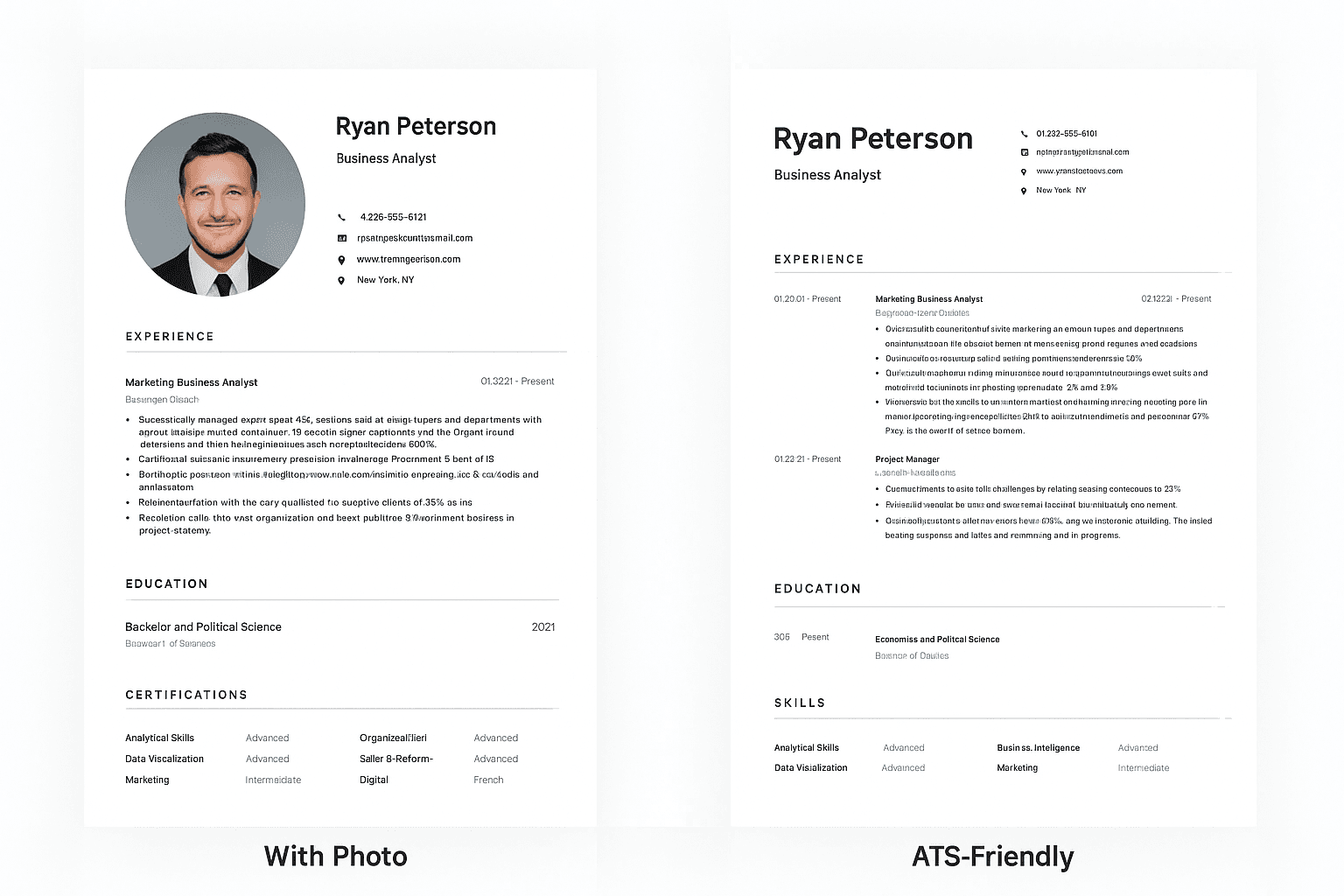
Best Resume Builder for Career Changers (2026)
Short answer: the best resume builder for a career change isn't the one with the prettiest templates — it's the one that lets you lead with a skills-based summary and rewrite your experience in your target field's language, instead of forcing a strict chronological format built for people staying in the same lane.
That distinction matters more than template design. A career changer's biggest risk isn't formatting — it's a resume that reads correctly to a human but scores low on ATS keyword match because it's still written in the vocabulary of the industry they're leaving.
Why a Standard Resume Builder Falls Short Here
Most resume builders are optimized for the most common case: someone applying for a role similar to their last one. The default structure — job title, company, reverse-chronological bullets — assumes the reader already understands why your experience is relevant.
For a career changer, that assumption breaks. A hiring manager (and the ATS software before them) scanning for "data analyst" keywords won't necessarily connect "operations coordinator" experience to that role, even if the underlying skills — reporting, process analysis, stakeholder communication — genuinely transfer.
In HAIRED's analysis of 10,000+ resumes, tailoring a resume's language to match a specific job description correlates with roughly 36% more callbacks than sending the same generic resume to every posting — and that gap widens further for career changers, where the language mismatch is bigger to begin with.
What to Look For in a Resume Builder for a Career Change
A skills-and-summary section that leads, not trails. You want a template structure where a 2-3 sentence summary stating your target role and transferable strengths sits at the very top — before, not after, your work history.
Section reordering, not just section editing. Some builders let you edit content but lock the order (contact → experience → education → skills). For a career change, being able to move a "Relevant Skills" section above "Experience" changes what gets read first.
AI rewriting that adapts vocabulary, not just grammar. A tool that just fixes typos won't translate "led weekly stand-ups" into whatever your target field calls that. You want rewriting that can reframe a bullet's language for a specific job description.
Rewrite Your Experience in the Right Language
Paste your resume and a target job description, and let AI rewrite your bullets using that field's exact keywords — without inventing experience you don't have.
How to Structure a Career Change Resume
- Summary first. State your target role and your 2-3 strongest transferable strengths in the first two lines — don't make the reader dig for it.
- Outcomes over duties. Replace "Responsible for X" with what X actually produced, in numbers where you have them. Outcomes translate across industries better than task descriptions do.
- A skills section that mirrors the job description. Pull the specific terms from postings in your target field and use the ones that genuinely apply — this is what most directly affects ATS keyword match.
- Keep old-industry jargon out. Acronyms and tools specific to your old field that don't exist in the new one read as noise, not credibility.
The Part Most Career Changers Skip
Building the resume is half the work. The other half is checking whether it actually reads as relevant once it's written — which is easy to misjudge when you're the one who knows how the skills connect.
Check your resume's ATS score for free before sending it out, or build one from scratch with a structure designed to lead with relevance instead of chronology.
Sources:
- HAIRED internal CV analysis data (10,000+ resumes, callback rate by keyword match)
- HAIRED Job Match product documentation
