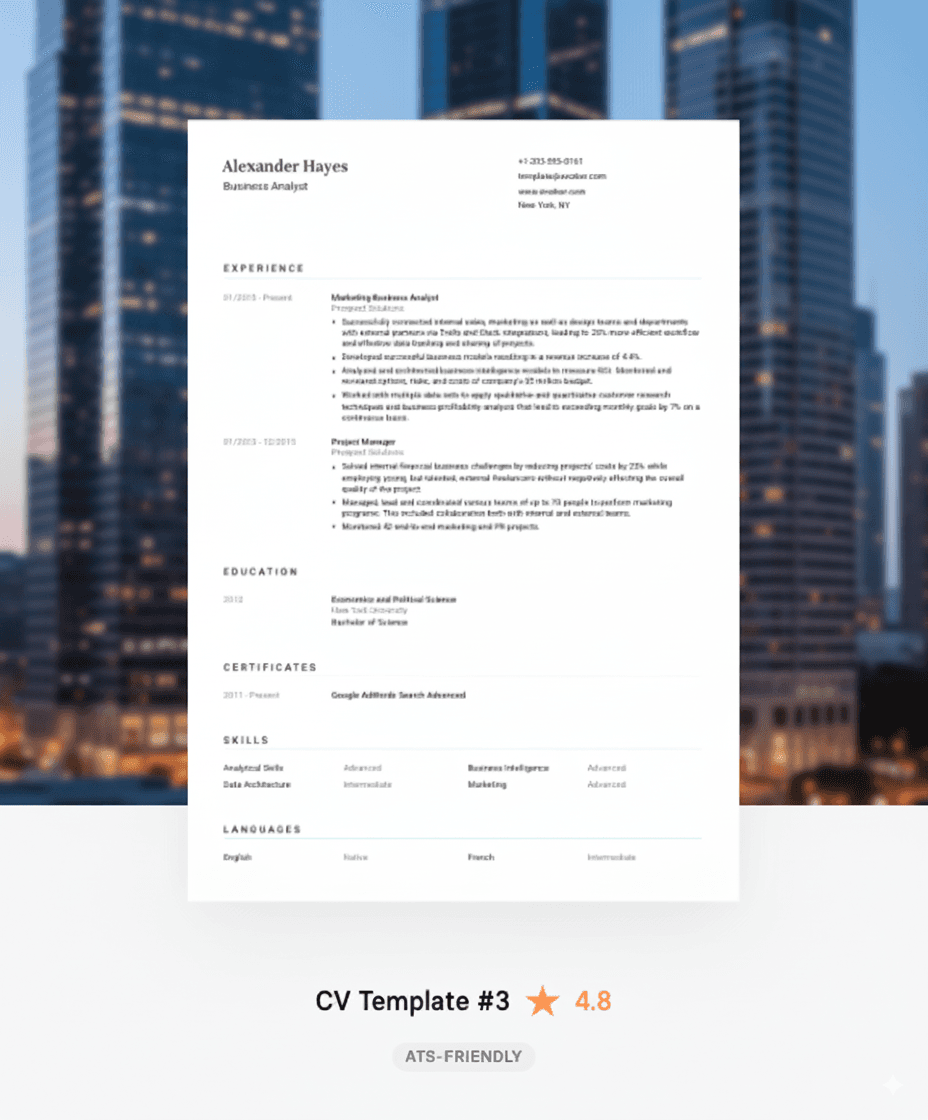
ATS Resume for Tech Jobs: How to Pass the Filters (2026)
Short answer: most tech resumes that get filtered out have the right skills — the ATS just can't read them, because of tables, columns, or a tech stack buried inside paragraph text instead of a plain skills list.
That's the pattern worth fixing first, before rewriting a single bullet point. In HAIRED's analysis of 10,000+ resumes, 73% had at least one critical ATS parsing error — and technical resumes, which lean heavily on visually organized skill grids and multi-column layouts, are disproportionately affected.
How ATS Software Actually Reads a Tech Resume
Most applicant tracking systems parse a resume by extracting raw text in reading order, then matching that text against the job description's keywords. Two things break this for technical resumes specifically:
Tables and multi-column layouts. A two-column resume with "Skills" in a sidebar and "Experience" in the main column often gets parsed out of order, interleaving sentence fragments from both columns into nonsense.
Skill grids and icon bars. Visual skill representations (star ratings, progress bars, logo icons for each technology) frequently extract as blank space — the ATS sees that you rated something, not what it was.
None of this shows up when you look at the PDF yourself. It only shows up in what the ATS actually extracts, which is why a resume can look great and still underperform.
The Format That Actually Works for Tech Roles
Single column, standard headings. Contact info, Summary, Experience, Skills, Education — in that order, no sidebars, no tables.
A plain-text skills section, grouped by category:
Languages: Python, TypeScript, Go
Frameworks: React, Node.js, Django
Infrastructure: AWS, Docker, Kubernetes
Exact keyword matching to the job posting. If the posting says "PostgreSQL," write "PostgreSQL" — not "SQL databases." ATS keyword matching is frequently literal, and generic paraphrasing costs you a match you'd otherwise get.
Bullets that lead with impact, not just tasks. "Reduced API latency by 40% by redesigning the caching layer" gives the ATS the keyword ("caching," "API") and gives a human reviewer the outcome, in one line.
Check If Your Resume Actually Parses
Upload your resume and see exactly what an ATS extracts from it — including whether your skills section and formatting are readable.
A Quick Pre-Submit Checklist
- No tables, text boxes, or multi-column layouts
- Skills listed as plain text, grouped by category, matching the job posting's exact terms
- No skill bars, star ratings, or icon-only sections
- One page for most roles under 8-10 years of experience
- Contact info (including GitHub/portfolio) as plain text, not an icon graphic
Fix the Format, Then Tailor the Content
Getting past the ATS is the first filter, not the only one. Once your resume parses cleanly, the next lever is matching it to the specific role — resumes with a 70%+ keyword match to a job description get 5.8x more recruiter replies than a generic one sent everywhere.
Check your resume's ATS score for free, or use Job Match to rewrite it against a specific job posting's exact keywords.
Sources:
- HAIRED internal CV analysis data (10,000+ resumes analyzed, ATS parsing error rate)
- HAIRED internal data (recruiter reply rate by keyword match)
