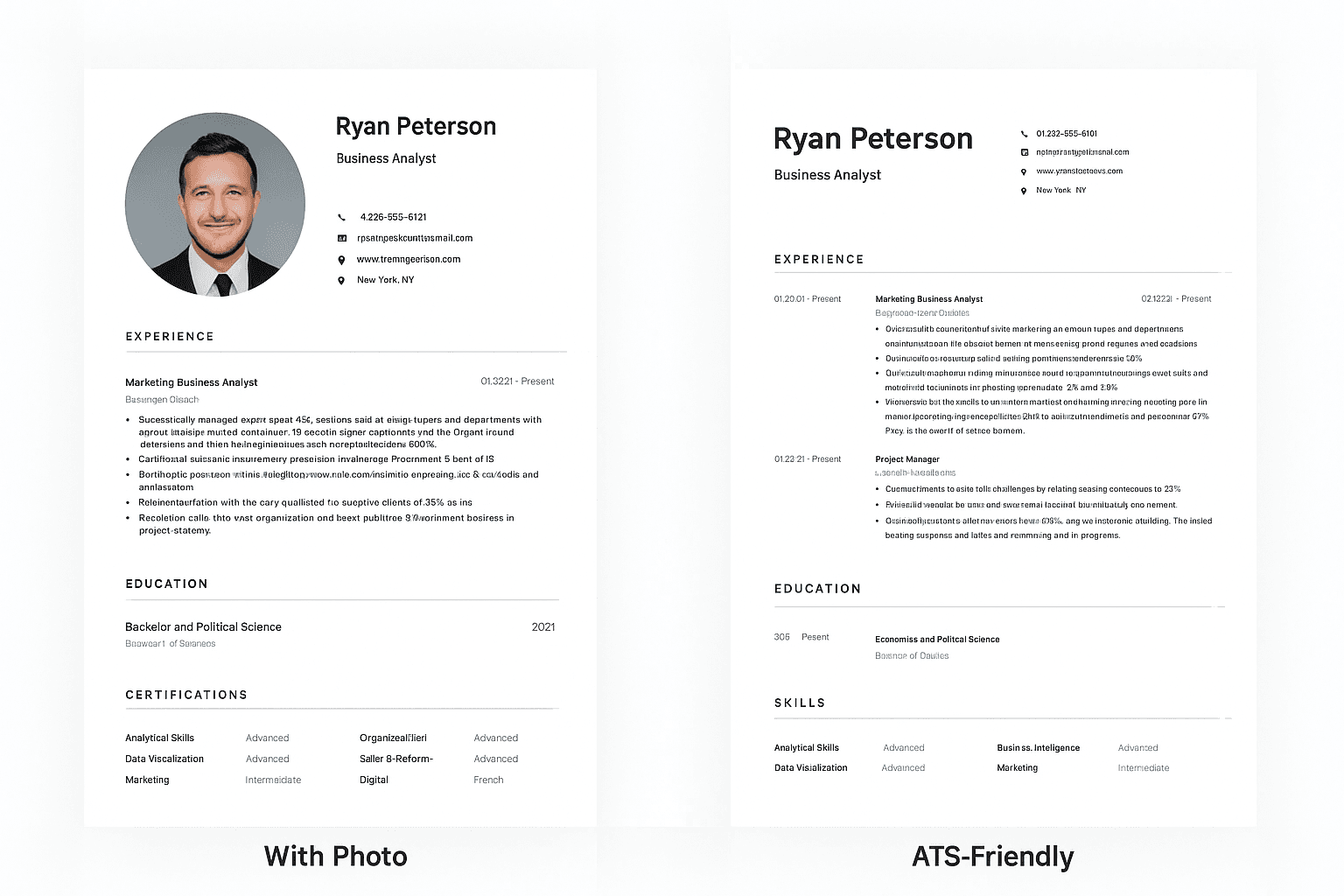
Quick Answer
It depends on whether you mean the section heading or a word inside a bullet point — and mixing these up is where most "skills synonyms" advice goes wrong.
- As a section header: don't swap it. "Skills" is one of the most reliably ATS-recognized headings on a resume. Alternatives like "Core Competencies" or "Technical Stack" are parsed inconsistently.
- Inside a bullet, describing your proficiency: synonyms genuinely help. Use "proficient in," "adept at," "experienced with," "well-versed in," or "certified in" instead of a flat "skilled in X."
Why the Section Header Is the One Place Not to Get Creative
It's tempting to rename "Skills" to something that sounds more distinctive — "Core Competencies," "Technical Stack," "Areas of Expertise." The problem is that Applicant Tracking Systems are pattern-matching engines trained on a specific, limited vocabulary of standard section headings. When a heading falls outside that recognized set, the ATS either skips the section entirely or files its contents somewhere a recruiter never looks.
This isn't a theoretical risk. In HAIRED's analysis of 10,000 resumes, 44% used at least one non-standard section heading, and in 19% of those cases, an entire section — most commonly Skills or Summary — became effectively invisible to the system. A creatively-named skills section doesn't read as "less impressive" to an ATS — it often doesn't read at all.
Headings that parse reliably: Skills, Technical Skills, Core Skills, Work Experience, Education, Summary, Certifications.
Headings that parse inconsistently: Core Competencies, Technical Stack, Areas of Expertise, Toolkit.
If you want to be more specific than a bare "Skills," "Technical Skills" or "Core Skills" both keep the recognized word intact while adding useful context — that's the safe way to differentiate the section without risking how it's parsed.
Where Synonyms Actually Help: Inside Your Bullets
The rule above is specifically about the section header. Inside your bullet points and summary, describing your proficiency with more specific language is genuinely useful — this is where "skilled in" starts to sound repetitive fast.
| Instead of | Try |
|---|---|
| "Skilled in Python and SQL" | "Proficient in Python and SQL" |
| "Skilled in project management" | "Experienced in leading cross-functional projects" |
| "Skilled in Adobe Creative Suite" | "Adept at Adobe Creative Suite, including Photoshop and Illustrator" |
| "Skilled in customer service" | "Well-versed in high-volume customer support" |
Weak: "Skilled in data analysis and reporting." Stronger: "Proficient in data analysis and automated reporting, reducing manual reporting time by [X hours/week]."
One More Thing: Match the Job Posting's Exact Wording
If a job posting lists specific skills or tools by name, use that exact term somewhere in your Skills section, not just a category description. ATS keyword matching looks for the specific terms in the posting — "Python," "Salesforce," "Google Analytics" — not a general claim of proficiency around them.
Not Sure If Your Skills Section Is ATS-Readable?
HAIRED's free ATS analyzer checks your section headings, keyword match, and formatting against real parsing rules.
Related Word Swaps
- Synonyms for "Managed" on a Resume
- Synonyms for "Led" on a Resume
- Synonyms for "Developed" on a Resume
- Synonyms for "Assisted" or "Helped" on a Resume
- Synonyms for "Collaborated" on a Resume
- "Responsible For" — Why to Avoid It
- Synonyms for "Maintained" on a Resume
- Synonyms for "Experience" on a Resume
Bottom Line
Don't get creative with the Skills header — it's one of the few places on a resume where the boring, standard word is the correct choice. Save the more specific language for how you describe your proficiency inside each bullet, where precision actually helps a reader (human or ATS) understand what you can do.
Check your resume's section headings for ATS compatibility — free, and it flags exactly this kind of issue before a recruiter's system ever does.
